

Improving your mental health can sometimes feel challenging, particularly when you are living or working under pressure, navigating change, or going through significant life transitions.
In the lead-up to World Mental Health Day on Saturday 10 October, The Good Mental Health Project is encouraging you to explore what ‘good’ mental health means to you and to identify practical ways of supporting your wellbeing in everyday life.
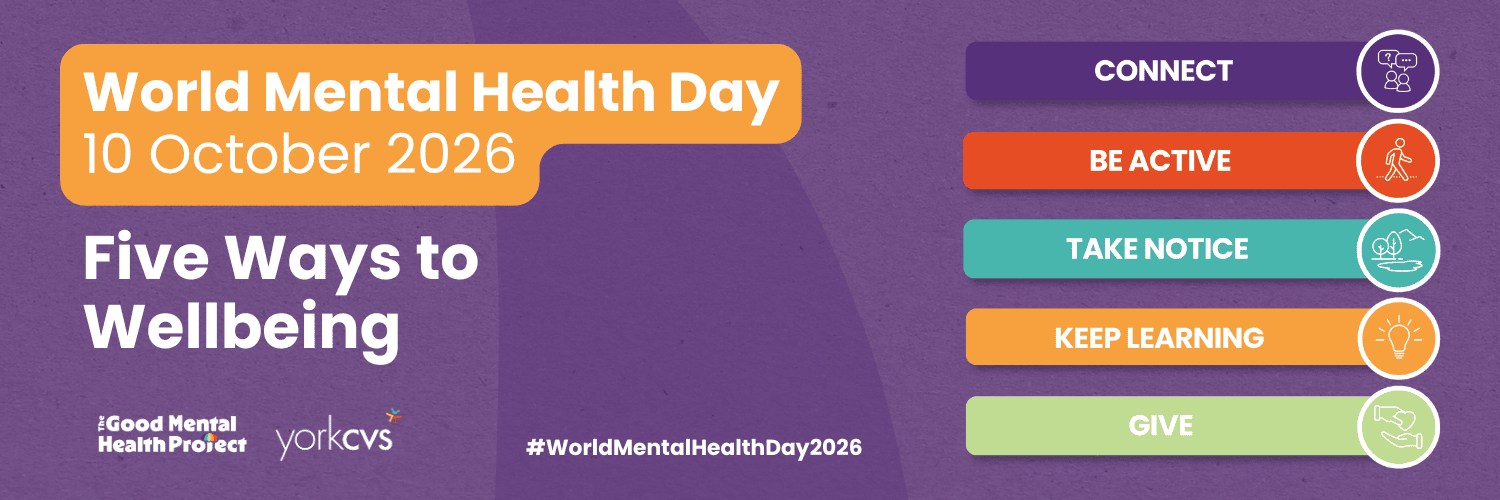
Through our work, we help individuals discover simple, effective tools that can support positive mental health, including the Five Ways to Wellbeing, an evidence-based framework that promotes five key actions to help build resilience, strengthen wellbeing, and support good mental health. By incorporating these small, practical steps into daily life, people can feel more connected, positive, and better equipped to manage life’s challenges (New Economics Foundation, 2008).
Everyone’s mental health journey is different.
Whether someone is facing challenges themselves, seeking support for the first time, or supporting a loved one, everyone deserves to feel heard, understood and supported.

Why taking notice matters
Taking notice is one of the Five Ways to Wellbeing because it supports awareness, grounding, and emotional regulation. Our brains are wired to focus on threat and danger; this is how we stay safe. As a result, our attention is often pulled toward what’s stressful, worrying, or urgent and all the things that have, could or are going wrong.
Noticing moments of safety, beauty, or gentleness (often referred to as glimmers) within the chaos of daily life, is not something that often happens automatically. It’s something we must actively choose to do. Noticing these moments does not erase any difficulty or discomfort but can offer brief moments of relief for our nervous system and help to create balance within our emotional wellbeing.
Ways we can ‘Take Notice’
Taking notice doesn’t have to look like formal mindfulness or long periods of stillness. It isn’t about daily yoga, clearing your mind, or meditation; unless you want it to be!
Taking notice can involve:
Internal awareness – becoming aware of a feeling, a bodily sensation, or a thought, without analysing it or trying to fix it. Simply noticing an emotion or experience and allowing it to be there. It might look like:
- Feeling the warmth of a cup of tea in your hands
- Savouring the taste or texture of something (e.g. food or clothing)
- Noticing the weather, the sky, the moon, or nearby nature
External awareness – noticing what’s around you in the world outside of yourself. This might be something small, ordinary, or quiet, offering a moment of grounding or connection.
- Naming a feeling quietly to yourself, without trying to change it
- Noticing tension or softness in your body
- Becoming aware of your temperature, hunger, need for fresh air
Remember
Taking notice is not another task to add to the ‘to do’ list. It’s about allowing small moments of awareness (however brief) to exist in and amongst your daily life.
You don’t need to notice everything or worry about ‘doing it properly’. Nor do you need to feel calm, grateful, or positive for it to count and for it to contribute positively to your overall wellbeing.
The Good Mental Health Project is funded by City of York Council Public Health and delivered by York CVS.